Some desserts impress with their appearance, while others win you over with the very first bite. Portokalopita, the traditional Greek orange cake, manages to do both. Although it looks relatively simple, it is one of Greece’s most beloved desserts. A perfect combination of flaky phyllo pastry, fresh oranges, and sweet syrup that creates an irresistibly moist and flavorful treat.
If you have ever traveled to Greece, chances are you’ve seen it displayed in bakeries, cafés, and family-run tavernas. And if you haven’t, it’s time to discover one of the sweetest treasures of Greek cuisine.
What Is Portokalopita?
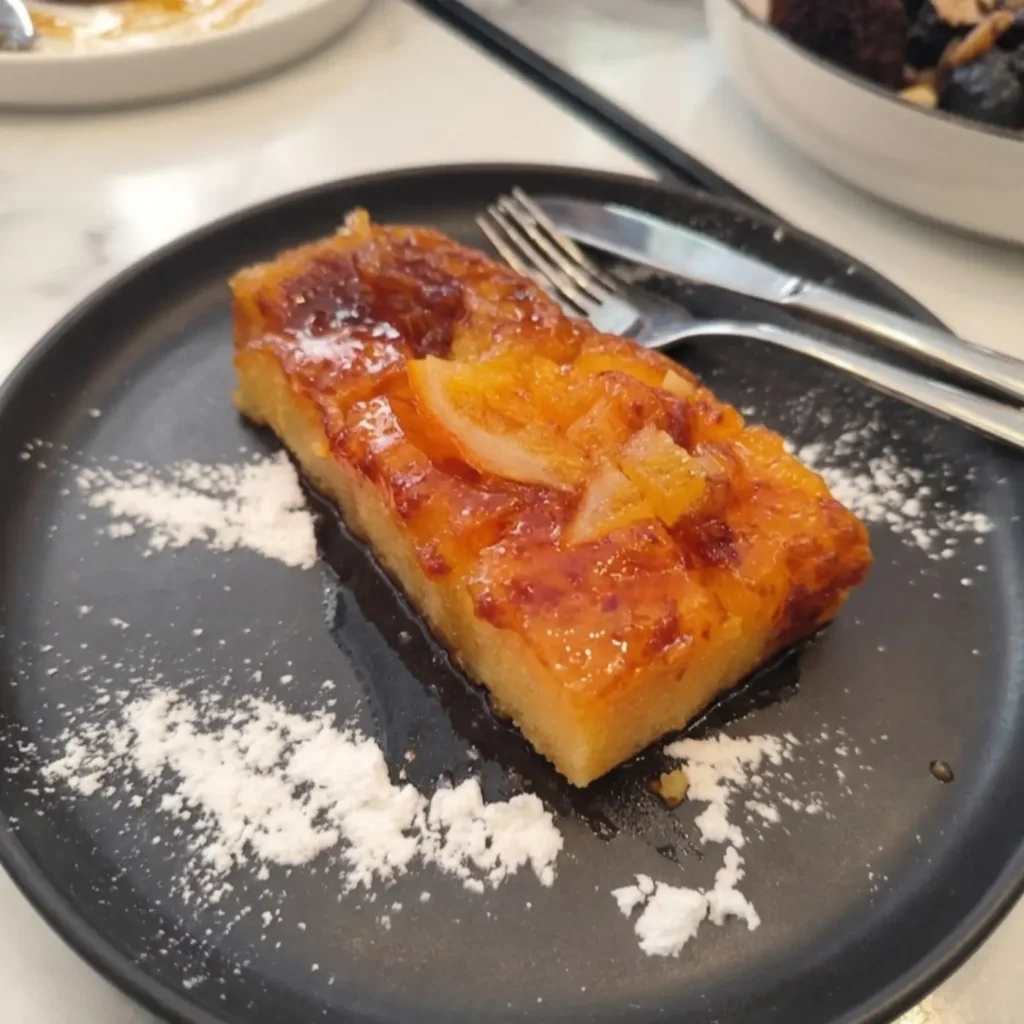
The name “Portokalopita” comes from two Greek words: portokali (orange) and pita (pie or cake). Unlike a traditional orange cake, Portokalopita’s defining ingredient is phyllo pastry. Instead of relying solely on flour, dried and crumbled phyllo sheets are mixed into the batter, creating a unique texture that is both light and rich.
After baking, the cake is generously soaked with orange-infused syrup. The result is a dessert that is incredibly moist, bursting with citrus flavor, and unlike anything most people have tried before.
Greece’s Long Love Affair with Oranges
Greece’s Mediterranean climate provides ideal conditions for growing citrus fruits. Across the country, especially in regions such as the Peloponnese and Argolis, orange groves are a familiar part of the landscape.
Over generations, oranges have become an essential ingredient in Greek cooking. They appear in everything from fresh juices and preserves to savory dishes and desserts. Portokalopita is perhaps the finest example of how a simple local ingredient can become a symbol of a nation’s culinary heritage.
A Dessert Born from Resourcefulness
Like many traditional recipes, Portokalopita has humble origins. Greek households have always valued making the most of available ingredients, and this cake is believed to have emerged as a creative way to use leftover phyllo pastry.
When phyllo sheets became too dry for making savory pies such as spanakopita or tiropita, they weren’t thrown away. Instead, home cooks crumbled the pastry and combined it with eggs, yogurt, and fresh orange zest to create a completely new dessert. Topped with fragrant syrup, the result was so delicious that it became a staple in homes and bakeries throughout Greece.
Why Everyone Falls in Love with Portokalopita
What makes Portokalopita special is its balance.
It is sweet without being overwhelming, thanks to the bright acidity of fresh oranges. The syrup adds richness, while the citrus notes keep the dessert refreshing and light on the palate.
Its texture is equally distinctive. It is not quite a sponge cake and not quite a pastry. Instead, it occupies a delicious middle ground, offering a soft, custard-like interior with subtle layers created by the phyllo.
Whether served after dinner or alongside an afternoon coffee, it delivers comfort and indulgence in every bite.
The Secret Behind a Great Portokalopita
Ask any Greek baker, and they will likely tell you that the secret lies in the phyllo.
The pastry must be thoroughly dried before being crumbled into the batter. This step helps create the cake’s characteristic texture and allows it to absorb the syrup evenly after baking.
Another important technique involves temperature contrast. Traditionally, either a hot syrup is poured over a cooled cake or a cooled syrup is poured over a hot cake. This ensures maximum absorption and guarantees the moist texture for which Portokalopita is famous.
How Greeks Serve It
Throughout Greece, Portokalopita is commonly served in generous square slices. Some cafés accompany it with a scoop of vanilla ice cream, while others pair it with thick Greek yogurt and a sprinkle of cinnamon.
Perhaps the most traditional way to enjoy it is with a cup of Greek coffee, creating a combination that perfectly reflects the relaxed pace of Mediterranean life.
More Than Just a Dessert
Portokalopita represents many of the values that define Greek cuisine: simplicity, creativity, respect for ingredients, and a deep connection to local traditions.
While Greece is internationally known for dishes such as moussaka, souvlaki, and tzatziki, desserts like Portokalopita reveal another side of the country’s culinary identity. These recipes passed down through generations, made for family gatherings, celebrations, and everyday enjoyment. Every slice tells a story of home kitchens, orange groves, and the enduring tradition of transforming simple ingredients into something extraordinary.
Final Thoughts
If you’re looking for a dessert that truly captures the spirit of Greece, Portokalopita is hard to beat. Combining the vibrant flavor of fresh oranges, the delicate texture of phyllo pastry, and the richness of sweet syrup, it offers a taste of the Mediterranean in every bite.
Whether you’re planning a trip to Greece or simply searching for your next favorite dessert, Portokalopita deserves a place on your table. One slice is often all it takes to understand why this humble orange cake has become a Greek classic.
If you want to know where you can get my favorite Portokalopita, drop a comment, send me a message, or join my food tour in Athens.